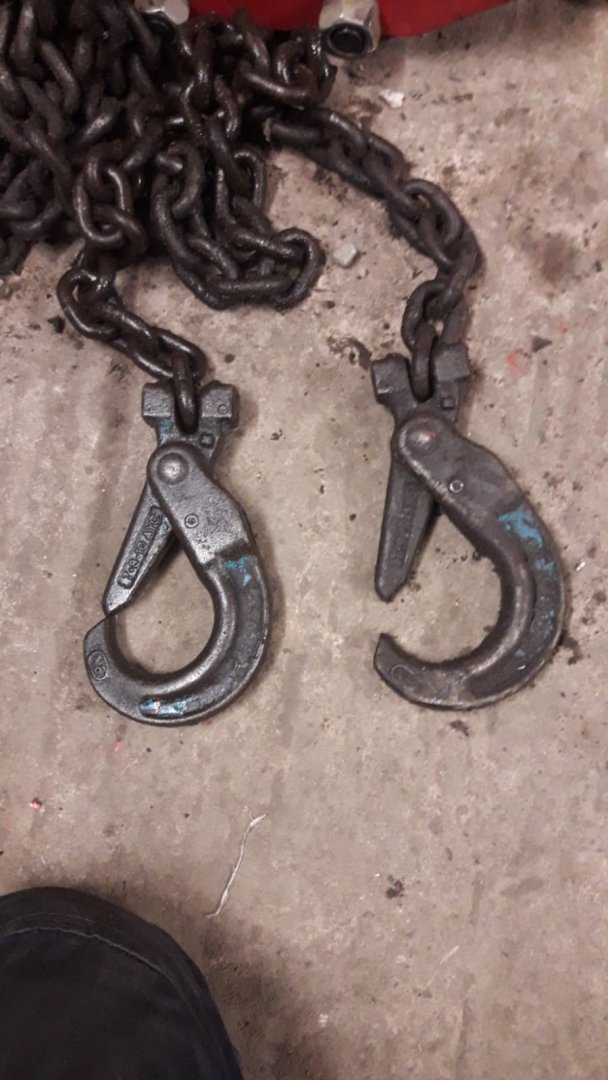
Stretched or Elongated Lifting Hooks — Causes and Safety Risks
Date: 13.11.25
During a recent site visit, one of our engineers identified a lifting hook showing signs of elongation. This condition is a serious safety hazard and typically results from incorrect use or overloading.
Why Hooks and Chains Stretch
- Overloading
- Cause: Applying a load greater than the component’s rated Working Load Limit (WLL).
- Effect: The metal undergoes plastic deformation—it permanently stretches instead of springing back.
- Result: The throat opening increases, reducing the hook’s ability to hold loads securely.
- Shock Loading
- Cause: Sudden application of force (e.g., dropping a load onto a taut chain or jerking a lift).
- Effect: Short, high-intensity forces exceed the steel’s yield strength.
- Result: The hook or chain stretches or bends, even if the static load was within limits.
- Side or Tip Loading
- Cause: Load is applied at an angle or only on the hook tip instead of in-line with its centre.
- Effect: Uneven stress causes deformation at the neck or throat area.
- Result: The hook opens or twists, compromising its integrity.
Consequences of Stretching
- Loss of Load Capacity
- Once stretched, the metal’s structure is permanently deformed.
- The WLL is no longer valid, even if the component looks undamaged.
- Sudden Failure or Breakage
- Internal fibres of the steel are weakened.
- The hook or chain may fail suddenly, causing the load to drop.
- Reduced Elasticity and Ductility
- The ability to flex or absorb shock loads is lost.
- Minor jerks or shock loads can cause immediate fracture.
- Improper Fit and Engagement
- An enlarged throat opening can allow slings or links to slip out.
- Elongated chain links may not seat correctly, causing unsafe angles or tension.
- Hidden Internal Damage
- Stretching may introduce microcracks or fatigue not visible externally.
- These can grow over time, leading to catastrophic failure.